
Educational note: This guide is for general education and does not replace medical care. If you have heavy bleeding, severe shortness of breath, fainting, or high fever with worsening weakness, seek urgent evaluation.
Definition
What chronic myeloid leukemia is and how it differs from other leukemias
chronic myeloid leukemia is a cancer of the bone marrow (the tissue that makes blood cells) where certain white blood cells are produced in an uncontrolled way. It usually develops more slowly than acute leukemias, which is why the word “chronic” is used. Many people learn they have chronic myeloid leukemia after routine blood work, before they feel seriously ill.
The key biology in one minute
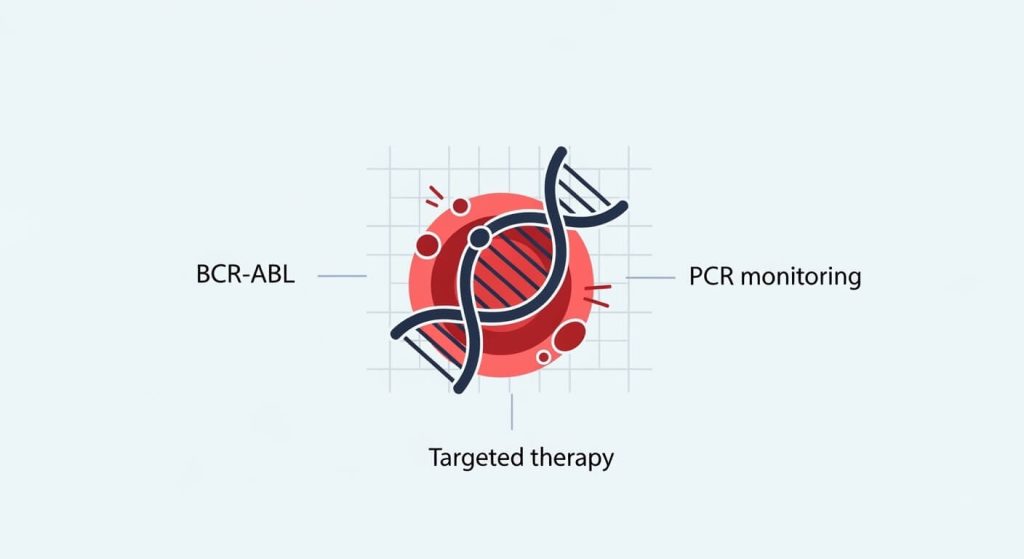
Most cases are driven by a DNA change that creates an abnormal signal telling cells to keep growing. Doctors often describe this as the BCR-ABL “fusion” gene (sometimes linked to the Philadelphia chromosome). That growth signal can be targeted with specific medicines, which is a major reason outcomes for chronic myeloid leukemia have improved over time.
Who it can affect
- Most common in adults, but it can occur at any age
- Not typically inherited in families
- Often found during a checkup blood test rather than because of a single symptom
Causes
Why chronic myeloid leukemia happens: genes in cells, not something you “caught”
chronic myeloid leukemia starts when a blood-forming stem cell in the bone marrow acquires a genetic change during life (not passed down from parents). This change leads to an overactive growth signal in myeloid cells, so the body makes too many abnormal white blood cells.
What can raise risk (and what usually does not)
Possible risk factors include:
- Older age
- Prior exposure to high-dose radiation (for example, certain cancer treatments)
Things that are not typical direct causes:
- Everyday infections or “low immunity”
- A specific diet choice
- Stress alone (stress can affect how you feel, but it doesn’t create the leukemia)
The phases you may hear about
Doctors may describe chronic myeloid leukemia by phase:
- Chronic phase: most common at diagnosis; symptoms may be mild
- Accelerated phase: blood counts become harder to control
- Blast phase (blast crisis): behaves more like an acute leukemia and needs urgent care
Symptoms
Symptoms of chronic myeloid leukemia, from subtle to more noticeable
Many people have no clear symptoms early. When symptoms appear, they often relate to anemia, high white blood cell counts, or an enlarged spleen.
Common symptoms can include:
- Fatigue or reduced stamina
- Unexplained weight loss
- Night sweats
- Low-grade fever
- Feeling full quickly or discomfort under the left ribs (enlarged spleen)
- Bone or joint aches
- Easy bruising or bleeding (less common early, more concerning if severe)
Signs that warrant faster medical attention
Seek prompt evaluation if you notice:
- Bleeding that is heavy or hard to stop
- New severe shortness of breath, chest pain, or fainting
- High fever with chills, or fever that doesn’t improve
- Rapidly worsening weakness or confusion
Diagnosis
How chronic myeloid leukemia is confirmed and monitored over time
Diagnosing chronic myeloid leukemia usually involves blood tests plus confirmation of the specific genetic driver.
Tests commonly used
- Complete blood count (CBC) with differential: often shows high white blood cells and sometimes anemia or platelet changes
- Peripheral blood smear: looks at cell shape and maturity
- Bone marrow aspiration/biopsy: helps confirm diagnosis and assess phase
- Cytogenetic testing / FISH: checks for the characteristic chromosome change
- Quantitative PCR: measures the BCR-ABL signal to track response to treatment
Why monitoring is a big part of care
With chronic myeloid leukemia, follow-up testing isn’t just “extra.” Regular lab checks help your team confirm that treatment is working, adjust doses, and detect resistance early—often before symptoms return.
Medications
Medicines for chronic myeloid leukemia: targeted therapy and supportive options
For most people, the foundation of treatment is targeted therapy that blocks the abnormal growth signal.
Tyrosine kinase inhibitors (TKIs)
These medicines are often first-line for chronic myeloid leukemia and can produce deep, lasting remissions for many patients. Common examples include:
- Imatinib
- Dasatinib
- Nilotinib
- Bosutinib
- Ponatinib (often reserved for specific resistance patterns)
Your clinician chooses a TKI based on disease phase, other health conditions, potential side effects, and treatment goals.
Other medicines that may be used
Depending on the situation, doctors may add or temporarily use:
- Hydroxyurea: to bring very high blood counts down quickly at the beginning
- Interferon alfa: sometimes used in special situations (including selected pregnancy planning discussions)
- Chemotherapy: more common in advanced phases
- Medicines to prevent complications: such as uric-acid–lowering drugs if cell breakdown risk is high
If you’re researching medication affordability and safe access pathways, these internal resources can help with planning and safety checks: a guide to pharmacies in Tijuana, Mexico and how to evaluate a certified medical tourism professional.
Treatments
Treatment approach for chronic myeloid leukemia: remission, monitoring, and next steps
Treatment is personalized, but most plans follow a clear logic: control the leukemia, reach remission, then maintain it with ongoing monitoring.
Typical treatment path in chronic phase
- Start a TKI and monitor blood counts frequently at first
- Use PCR milestones over months to confirm the leukemia signal is dropping
- Adjust therapy if side effects limit adherence or if response is slower than expected
What happens if the response is not ideal
If chronic myeloid leukemia doesn’t respond as expected, your team may:
- Check adherence and drug interactions (some meds and supplements can interfere)
- Switch to a different TKI
- Repeat genetic testing to look for resistance mutations
- Consider more intensive strategies depending on phase and risk
Stem cell transplant and advanced disease care
An allogeneic stem cell (bone marrow) transplant is not needed for most people today, but it can be considered for:
- Blast phase or high-risk disease not controlled with TKIs
- Multiple TKI failures or high-risk resistance patterns
Supportive care also matters: vaccines and infection prevention, fatigue management, nutrition support, and mental health resources can improve day-to-day life during chronic myeloid leukemia treatment.
If you want a patient-friendly overview of diagnosis, staging, and treatment options from National Cancer Institute (NCI), use this resource: NCI CML information.
FAQs
Quick answers about chronic myeloid leukemia
Is chronic myeloid leukemia curable?
Many people achieve long-term remission with targeted therapy, and some may reach very deep responses. Whether this is described as “cure” depends on individual factors and how the disease behaves after years of control.
Can chronic myeloid leukemia be found by accident?
Yes. It’s common for chronic myeloid leukemia to be detected on routine blood tests before major symptoms appear.
Will I need treatment forever?
Some people stay on a TKI long term. In selected cases with stable, deep responses, specialists may discuss carefully supervised treatment-free remission. This decision must be individualized and requires close monitoring.
What side effects should I report right away?
Contact your care team for chest pain, severe shortness of breath, fainting, significant swelling, high fever, or unusual bleeding. For less urgent effects (rash, diarrhea, muscle cramps), report them too—dose or medication changes can help.
Does lifestyle make a difference?
Lifestyle won’t replace treatment, but good sleep, gentle activity, avoiding tobacco, and keeping follow-up appointments can support recovery and help you tolerate therapy for chronic myeloid leukemia.
References
Sources and organizations to learn more
- National Cancer Institute (NCI): CML Treatment (PDQ®)
- Leukemia & Lymphoma Society (LLS): patient education on CML
- Peer-reviewed hematology guidance plus your clinician’s individualized plan