
Psoriatic arthritis overview
Psoriatic arthritis is a form of inflammatory arthritis that can affect people who have psoriasis—a skin condition that can cause itchy, scaly patches. In many cases, psoriasis appears first, and joint symptoms develop later, sometimes years afterward.
The main symptoms of psoriatic arthritis are joint pain, stiffness, and swelling. Symptoms can range from mild to severe, and it’s common for the condition to cycle through flare-ups (when symptoms worsen) and quieter periods when symptoms ease.
There is no cure for psoriatic arthritis, but treatment can reduce symptoms, protect joints from damage, and help you stay active and functional.
Definition
What is psoriatic arthritis?
Psoriatic arthritis is an immune-mediated condition—meaning the immune system becomes overactive and triggers inflammation in joints and, in many people, the skin. It can affect joints and also the places where tendons and ligaments attach to bone (often called entheses).
This condition may involve joints on one side or both sides of the body. Some people notice symptoms first in smaller joints (fingers/toes), while others develop issues in larger joints or the spine.
Causes
Psoriatic arthritis happens when the immune system mistakenly attacks healthy tissue, leading to inflammation in joints and sometimes increased skin cell production. Researchers believe it’s linked to a mix of genetics and environmental triggers.
Some genes are associated with increased risk (including markers like HLA-B27 in certain patterns of disease), but not everyone with genetic risk develops symptoms. In some people, injury, viral illness, or bacterial infection may help trigger the condition if risk is already present.
Symptoms
Symptoms of psoriatic arthritis can come and go. You may have flares where pain and swelling increase, followed by times when symptoms improve.
Common symptoms include:
- Joint pain, swelling, and stiffness
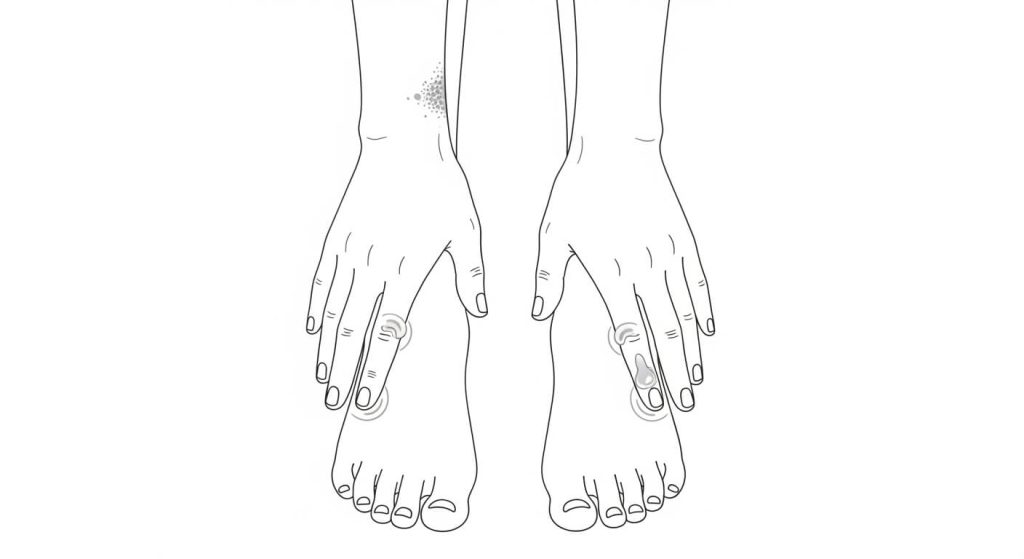
- Swollen fingers or toes (sometimes “sausage-like” swelling, also called dactylitis)
- Foot pain, especially at the heel (Achilles area) or the sole of the foot (plantar fascia)
- Lower back or pelvic stiffness (spondylitis/spine involvement)
- Nail changes (pitting, thickening, crumbling, lifting) that can resemble a fungal nail problem
- Eye inflammation (uveitis) that may cause red, painful eyes or blurry vision
- Fatigue or low energy
When to see a doctor
If you have psoriasis and begin noticing persistent joint pain, stiffness, or swelling, talk to a healthcare professional. Early evaluation—often with a rheumatologist—can help prevent lasting joint damage from psoriatic arthritis.
Seek urgent care if you develop sudden eye pain/redness with blurred vision (possible uveitis) or if symptoms rapidly worsen.
Diagnosis
Psoriatic arthritis is diagnosed by a licensed clinician based on symptoms, a physical exam, and testing to confirm inflammation and rule out other causes of joint pain.
Diagnosis commonly includes:
- A symptom review (including psoriasis history, flare patterns, spine/foot pain, and nail/eye symptoms)
- Joint and skin exam (including areas where tendons/ligaments attach to bone)
- Imaging when needed (for joints/spine changes or active inflammation)
- Blood tests that may help assess inflammation and exclude other inflammatory arthritis conditions
Because symptoms can overlap with rheumatoid arthritis and other joint disorders, confirmation by a clinician is important.
Medications
Medication choices are individualized and should be managed by a licensed clinician. Treatment may include prescription therapies chosen for your symptom pattern and severity.
Do not start, stop, or change medications without medical guidance.
Treatments
Treatment and long-term management
Treatment is individualized and guided by a licensed clinician (often a rheumatologist). The goals are to reduce inflammation, protect joint structure, relieve pain and stiffness, and maintain mobility.
A long-term plan may include:
- Prescription therapies chosen for your symptom pattern and severity
- Physical therapy or guided exercise to protect joints and improve strength
- Support for flare management (sleep, stress reduction, pacing activities)
- Monitoring for eye symptoms, nail involvement, and spine/foot pain
This page is for education only and does not replace medical care.
FAQs
Can psoriatic arthritis happen even if my psoriasis is mild?
Yes. Many people develop joint symptoms after psoriasis begins, but severity of skin symptoms doesn’t always match joint involvement. Any persistent joint pain, stiffness, or swelling should be evaluated.
What does “sausage-like” swelling mean?
Swelling of an entire finger or toe (dactylitis) can make it look uniformly puffy—sometimes described as “sausage-like.” It’s a common feature in psoriatic arthritis.
Is eye inflammation related to psoriatic arthritis serious?
It can be. Uveitis may cause red, painful eyes or blurry vision and can threaten vision if not treated. Seek urgent care for sudden eye pain/redness with vision changes.
How is psoriatic arthritis different from rheumatoid arthritis?
Both can cause painful, swollen joints, but psoriatic arthritis often involves dactylitis, nail changes, enthesitis, and can affect joints asymmetrically. A clinician can confirm the diagnosis.
Why does early treatment matter?
Early evaluation and treatment can help reduce inflammation and lower the risk of lasting joint damage from psoriatic arthritis.