


The avycaz vs zerbaxa question comes up more often than most people expect — not just in hospital rounds, but in the conversations patients and caregivers have when trying to understand a serious diagnosis. Both are FDA-approved IV antibiotics designed to fight drug-resistant gram-negative bacteria. Both are specialty medications with significant cost implications. But they are not the same drug, and the differences matter clinically.
This guide cuts through the clinical language so you can walk into your next conversation with your care team fully prepared.
What Are Avycaz and Zerbaxa?
Both drugs are combination antibiotics — each pairs a cephalosporin with a beta-lactamase inhibitor. That two-component design is what allows them to work against bacteria that have evolved to neutralize most standard antibiotics.
Avycaz (ceftazidime-avibactam), made by AbbVie, combines ceftazidime with avibactam, a novel inhibitor capable of shutting down KPC, ESBL, and AmpC-type bacterial enzymes. It was among the first drugs of its kind to gain FDA approval and is considered a major advancement in treating carbapenem-resistant infections.
Zerbaxa (ceftolozane-tazobactam), made by Merck, pairs ceftolozane — engineered specifically to overcome Pseudomonas aeruginosa resistance — with tazobactam, an inhibitor already familiar from its use in Zosyn. Zerbaxa was designed with one particularly dangerous organism in mind and excels in that context.
When patients and clinicians first compare avycaz vs zerbaxa, the assumption is often that these two drugs are interchangeable options for resistant infections. They are not — and the distinction has real consequences for treatment outcomes.
Avycaz vs Zerbaxa: The Differences That Actually Matter
Target Bacteria and Clinical Performance
This is where the avycaz vs zerbaxa comparison becomes genuinely meaningful — and where the clinical decision is typically made.
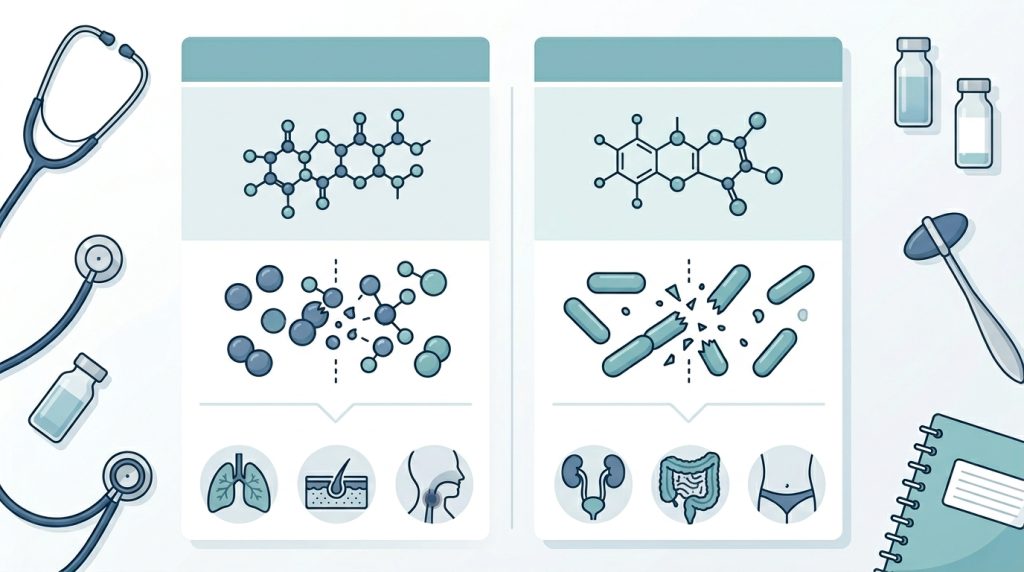
Avycaz dominates against carbapenem-resistant Enterobacterales (CRE) — organisms like Klebsiella pneumoniae and E. coli that produce enzymes capable of destroying most available antibiotics. In U.S. surveillance data from 2017–2018 across 70 medical centers, ceftazidime-avibactam showed 99.9% susceptibility against Enterobacterales overall, and 97.5% against carbapenem-resistant strains — rates no other tested agent came close to matching. Against multidrug-resistant (MDR) Enterobacterales specifically, Avycaz covered 99.2% of isolates versus only 53.8% for Zerbaxa.
Zerbaxa pulls ahead against multidrug-resistant Pseudomonas aeruginosa. Ceftolozane was engineered to resist the efflux pump mechanisms that make Pseudomonas so notoriously difficult to treat. A landmark 2024 retrospective study published in The Lancet Infectious Diseases, spanning 28 U.S. hospitals over seven years, found that patients treated with Zerbaxa for invasive MDR Pseudomonas infections had adjusted odds of clinical success more than twice as high as those treated with Avycaz. In pneumonia cases specifically, the advantage was even more pronounced.
The coverage summary in the avycaz vs zerbaxa debate: Avycaz casts a wider net against resistant Klebsiella and E. coli. Zerbaxa goes deeper against resistant Pseudomonas.
FDA-Approved Indications
Both drugs carry nearly identical approvals: complicated intra-abdominal infections (cIAI) with metronidazole, complicated urinary tract infections (cUTI), and hospital-acquired and ventilator-associated bacterial pneumonia (HABP/VABP). What differentiates the avycaz vs zerbaxa choice in practice isn’t the label — it’s the organism identified in culture results and its specific resistance profile.
Side Effects and Safety
Both drugs are administered intravenously under medical supervision. Shared risks include nausea, diarrhea, vomiting, and Clostridioides difficile-associated diarrhea. Both carry serious hypersensitivity warnings. Avycaz requires dose adjustment for reduced kidney function. Patients with known reactions to piperacillin-tazobactam should use caution with Zerbaxa. Neither drug is appropriate for self-management — both require oversight from an infectious disease specialist.
What These Drugs Cost — and Why It’s a Real Conversation
Avycaz and Zerbaxa are classified as specialty medications, which means higher prices, more complex insurance processes, and longer prior authorization timelines.
The cash price for Avycaz runs approximately $1,367 for a typical 3-vial fill. Zerbaxa lists around $1,879 per 10 vials, with discounted prices around $564–$708 through savings programs. Neither figure accounts for hospital or infusion center administration costs, which can multiply the total significantly.
Manufacturer assistance programs exist — AbbVie offers up to 12 months of Avycaz at no cost for qualifying patients; Merck provides a similar program for Zerbaxa. But navigating eligibility requirements during an active serious infection adds real stress to an already difficult situation.
For patients already managing high-cost specialty medications for conditions like autoimmune disease or cancer, this pricing landscape will feel familiar. Many Americans have started exploring licensed international pharmacies in Tijuana, Mexico as a way to access specialty medications at significantly lower costs. Organizations like Provide Rx Services help patients navigate that process safely, connecting them with properly licensed pharmacies through a structured, guided medical tourism program. If you’re weighing your options, our guide to top medical tourism destinations in 2025 explains why Tijuana remains the most practical and trusted choice for U.S. patients.

Which Drug Is Right for a Given Infection?
The avycaz vs zerbaxa decision requires culture results, resistance profiling, and infectious disease expertise. The pattern is fairly consistent:
- Confirmed carbapenem-resistant Klebsiella or E. coli → Avycaz is generally the stronger choice
- Confirmed multidrug-resistant Pseudomonas aeruginosa, especially in pneumonia → Zerbaxa has demonstrated better real-world outcomes
- Local resistance patterns at the treating institution → always factor into the final recommendation
Neither drug is a first-line antibiotic. Both are reserved for infections where standard options have failed or where resistance makes them the logical starting point. The CDC maintains clear guidance on antimicrobial stewardship at cdc.gov/antibiotic-use, which provides useful context on why careful prescribing matters for everyone’s long-term benefit. For a broader look at how specialty drug costs compare between brand and generic options, our breakdown of generic vs. brand-name drugs covers the key distinctions in plain language.
The Bottom Line on Avycaz vs Zerbaxa
Weighing avycaz vs zerbaxa comes down to one core principle: the right drug depends entirely on the specific bacteria causing the infection and its resistance profile. Both are clinical achievements that fill critical gaps older antibiotics cannot address — and both come with the cost and access challenges that define specialty medication in the U.S. today.
If you’re navigating the cost side of the equation — for these or other high-cost specialty medications — our team at Provide Rx Services is here to help you understand your options clearly and safely.
Have questions about accessing specialty medications? Reach out and schedule a no-pressure consultation with our team today.
This article is for informational purposes only and does not constitute medical advice. Antibiotic selection should always be determined by a qualified infectious disease specialist based on culture results, clinical evaluation, and the patient’s complete medical history.