
Educational note: This article is for education only and does not replace medical advice. If you have significant rectal bleeding, severe abdominal pain, persistent vomiting, or signs of anemia (fainting, chest pain, shortness of breath), seek urgent care.
Definition
Colorectal Cancer explained: colon vs. rectum and why the name matters
Colorectal Cancer is a term that includes cancers that start in the colon (the long part of the large intestine) and the rectum (the final segment before the anus). Doctors group them together because they share many risk factors, screening methods, and treatment approaches—yet the exact location still matters for staging and therapy decisions.
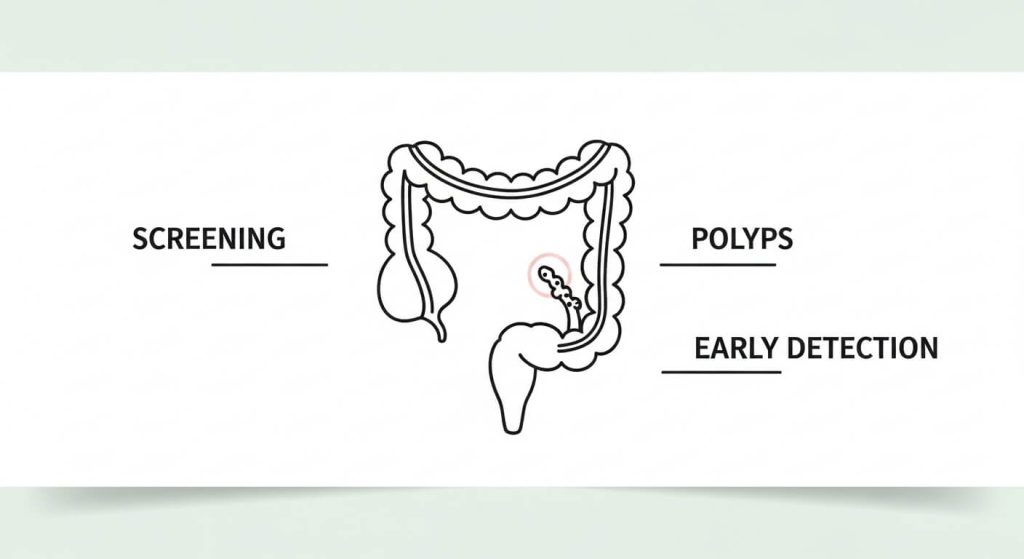
In many cases, Colorectal Cancer develops slowly over years. It often begins as a polyp—a small growth on the inner lining of the colon or rectum. Most polyps are not cancer, but certain types can change over time. This is one reason screening is so important: removing pre-cancerous polyps can prevent Colorectal Cancer before it starts.
What “early” vs. “advanced” can mean
- Early-stage: cancer is limited to the bowel wall or nearby tissue
- Locally advanced: spread to nearby lymph nodes or structures
- Metastatic: spread to distant organs (commonly liver or lungs)
Why screening gets so much attention
Colorectal Cancer can be present without obvious symptoms early on. Screening helps find cancer sooner—when treatment tends to be simpler and outcomes are often better.
Causes
What causes Colorectal Cancer at the cell level
Colorectal Cancer happens when cells in the colon or rectum accumulate DNA changes that disrupt normal growth control. Instead of stopping when they should, abnormal cells continue dividing and can form a tumor. Over time, some tumors invade nearby tissue and may spread through lymph nodes or the bloodstream.
Most people never have one single “cause.” It’s usually a combination of biology, lifestyle factors, and age-related changes.
Risk factors that can raise the chance of Colorectal Cancer
- Age (risk increases with age, though younger diagnoses have been rising)
- Personal history of polyps or prior Colorectal Cancer
- Family history (especially a first-degree relative)
- Inflammatory bowel disease (IBD), including ulcerative colitis or Crohn’s disease
- Inherited syndromes (for example, Lynch syndrome or familial adenomatous polyposis)
- Type 2 diabetes or insulin resistance
- Obesity, low physical activity
- Smoking and heavy alcohol use
- Diet patterns high in processed meats and low in fiber (association varies, but risk reduction strategies are still recommended)
What you can do about “modifiable” risks
You can’t change genetics or aging, but you can reduce overall risk by:
- Staying active most days of the week
- Maintaining a healthy weight
- Avoiding tobacco
- Limiting alcohol
- Building meals around fiber-rich foods (vegetables, legumes, whole grains)
Symptoms
Colorectal Cancer symptoms: what’s common and what’s urgent
Colorectal Cancer symptoms depend on tumor location and whether bleeding or narrowing is present. Some people have no symptoms early, so don’t wait for symptoms to consider screening.
Common symptoms include:
- A change in bowel habits that lasts (diarrhea, constipation, or alternating)
- Blood in the stool or rectal bleeding
- Ongoing abdominal discomfort (cramping, gas, pressure)
- Feeling like the bowel doesn’t fully empty
- Unexplained fatigue or weakness
- Unintentional weight loss
Symptoms that may suggest anemia from slow bleeding
Some Colorectal Cancer tumors bleed slowly. Watch for:
- Ongoing fatigue
- Dizziness or lightheadedness
- Shortness of breath with usual activity
- Pale skin
- Low iron on blood work
When to seek medical care quickly
Get urgent evaluation if you have:
- Heavy rectal bleeding or black/tarry stool
- Severe abdominal pain with vomiting or inability to pass gas/stool
- Fever with severe abdominal tenderness
- Fainting, chest pain, or severe shortness of breath
Diagnosis
How Colorectal Cancer is diagnosed and staged
The diagnostic process typically has two goals: confirm what’s happening in the colon/rectum and determine how far the disease has spread (staging).
Tests used to confirm the diagnosis
- Colonoscopy with biopsy: the most direct way to see the lining and take tissue samples
- Pathology review: confirms cancer type and features under the microscope
- Blood tests: may evaluate anemia, liver function, and general health status
- Tumor markers (select cases): a marker such as CEA may help with monitoring after diagnosis (it’s not a standalone screening test)
Imaging for staging
To plan treatment, clinicians often use imaging such as:
- CT scans of chest/abdomen/pelvis
- MRI (especially for rectal tumors, to map local spread)
- PET scans in selected situations
Molecular testing and personalized treatment
Many treatment decisions depend on tumor biology. Your care team may order tumor testing to guide therapy choices, including:
- Mismatch repair status (dMMR/MSI-H)
- KRAS/NRAS and BRAF mutations (important for targeted therapy decisions)
Medications
Medicines used in Colorectal Cancer care and what they’re for
Medications for Colorectal Cancer can be used before surgery (to shrink disease), after surgery (to reduce recurrence risk), or as the main treatment when cancer is advanced.
Chemotherapy
Chemotherapy uses medicines that target rapidly dividing cells. It can be used:
- After surgery for certain stages
- Before surgery or radiation in some rectal cancer cases
- For metastatic disease to control growth and symptoms
Targeted therapy
Targeted therapies focus on specific growth signals or blood-vessel pathways that tumors use. Whether a targeted drug helps often depends on biomarker results (such as RAS status).
Immunotherapy
Some Colorectal Cancer tumors respond well to immunotherapy—most commonly those with MSI-H/dMMR features. In these cases, immunotherapy may offer durable responses for certain patients.
Medication access and planning
Cancer care can be expensive, and patients sometimes explore structured options to understand pricing and access—especially for supportive medicines. If you’re researching cross-border logistics for prescription access (not controlled substances), see the guide on pharmacies in Tijuana, Mexico and how to evaluate a certified medical tourism professional guide. These resources focus on safety checks and documentation—your oncology team remains the decision-maker for treatment.
Treatments
Colorectal Cancer treatment options by stage and tumor location
Treatment depends on stage, location (colon vs rectum), overall health, and tumor biomarkers. Most people do best with a multidisciplinary team (gastroenterology, surgery, oncology, radiology).
Surgery
Surgery is often the main treatment for early-stage Colorectal Cancer and can also be part of care for selected advanced cases. Surgery may involve:
- Removing the tumor and nearby lymph nodes
- Repairing or bypassing a blockage
- Addressing complications such as bleeding or perforation
Radiation therapy (more common in rectal cancer)
Radiation is used more often for rectal tumors, sometimes combined with chemotherapy to reduce local recurrence risk or shrink tumors before surgery.
Systemic therapy for advanced disease
For metastatic Colorectal Cancer, systemic treatments (chemo, targeted therapy, immunotherapy when indicated) aim to:
- Slow growth and relieve symptoms
- Extend survival
- Preserve quality of life
Screening and early detection as “treatment prevention”
One of the most effective strategies is preventing cancer through screening—finding and removing polyps before they become cancer. A reliable starting point for screening guidance is the USPSTF colorectal cancer screening recommendation. Discuss your personal timeline with a clinician, especially if you have family history or IBD.
FAQs
Common questions about Colorectal Cancer
Who should get screened for Colorectal Cancer?
Most guidelines recommend routine screening for average-risk adults beginning in mid-adulthood, with earlier screening for higher-risk people (family history, prior polyps, certain genetic syndromes, or long-standing IBD). The right test and schedule depend on your risk level and preferences.
Can Colorectal Cancer happen without symptoms?
Yes. Early Colorectal Cancer and pre-cancerous polyps may cause no symptoms. That’s why screening is emphasized—even when you feel fine.
Are all colon polyps dangerous?
No. Many polyps never become cancer. However, some polyp types have higher risk over time, and pathology after removal helps guide follow-up intervals.
How do doctors decide which treatment is best?
Treatment decisions consider stage, tumor location (colon vs rectum), overall health, and tumor biology (biomarkers). This is why biopsies, imaging, and molecular testing can all be part of planning.
What are signs that should not be ignored?
Persistent rectal bleeding, black/tarry stool, worsening fatigue, unexplained weight loss, or a bowel-habit change that lasts should be evaluated—especially if you have risk factors for Colorectal Cancer.
References
Trusted sources patients and clinicians use for Colorectal Cancer
- U.S. Preventive Services Task Force (USPSTF): screening recommendations
- National Cancer Institute (NCI): colorectal cancer overview and treatment concepts
- American Cancer Society: screening options and risk reduction guidance
- Centers for Disease Control and Prevention (CDC): public health information on screening and prevention