


Educational note: This article is for education only and does not replace medical advice. If you have new or worsening symptoms, seek urgent medical care.
Definition
What egfr mutation lung cancer means and why doctors test for it
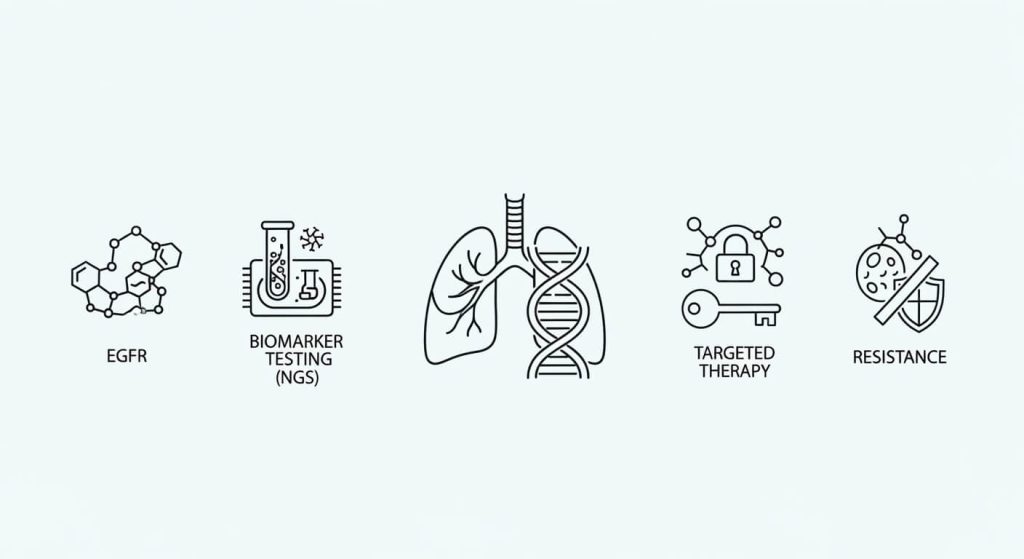
egfr mutation lung cancer refers to non-small cell lung cancer (NSCLC) that has a change (mutation) in the EGFR gene. EGFR stands for epidermal growth factor receptor, a protein that helps cells grow and divide. When this growth signal gets “stuck on,” cancer cells can multiply faster and avoid normal stop signals.
The key point: this diagnosis is defined by a tumor biomarker, not by how you feel day to day. Many people with EGFR-mutated NSCLC have the same symptoms as other lung cancers, but the mutation can strongly influence which treatments are most effective.
Why this biomarker matters
Knowing you have egfr mutation lung cancer can help your oncology team:
- Choose targeted medicines that directly block EGFR signaling
- Avoid treatments that are less likely to help in this subtype
- Plan when to repeat testing if the tumor changes over time
Common EGFR mutation patterns
Not all EGFR changes behave the same. Clinicians often talk about:
- “Sensitizing” EGFR mutations (often respond to EGFR inhibitors)
- EGFR exon 20 insertions (often need different targeted options)
- Resistance mutations that appear after treatment (the tumor evolves)
Causes
What leads to EGFR mutations in lung tumors and who is at higher risk
egfr mutation lung cancer happens when a lung cell develops a change in the EGFR gene during a person’s life. These changes are typically acquired (they occur in the tumor over time) rather than inherited from a parent. In other words, most people did not “pass it down” to their children.
Researchers don’t always know why one person’s tumor develops an EGFR mutation and another person’s does not. However, this biomarker is more commonly seen in:
- Adenocarcinoma subtype of NSCLC
- People with little or no smoking history (though it can occur in anyone)
- Certain ancestry groups (rates vary by population)
Risk factors vs. causes
A risk factor increases likelihood, but does not guarantee disease. For this subtype, risk is influenced by a mix of biology, environment, and chance genetic changes inside cells.
What you can control (and what you can’t)
You can’t control whether a tumor develops an EGFR mutation. But you can lower overall lung cancer risk by:
- Avoiding tobacco exposure and secondhand smoke
- Testing your home for radon and fixing elevated levels
- Using protective measures around workplace inhaled hazards when relevant
Symptoms
Symptoms you might notice with EGFR-mutated non-small cell lung cancer
Symptoms usually come from the tumor’s size and location or from spread to other organs—not from the EGFR mutation itself. That said, recognizing warning signs can help people seek evaluation sooner.
Possible symptoms include:
- Persistent cough or a change in a long-standing cough
- Shortness of breath or wheezing
- Chest discomfort
- Coughing up blood (even small amounts should be evaluated)
- Unexplained weight loss or low appetite
- Fatigue that doesn’t improve with rest
- Hoarseness
Signs that may suggest cancer has spread
If egfr mutation lung cancer spreads (metastasizes), symptoms may include:
- New or worsening headaches, dizziness, or changes in balance
- Bone pain (especially persistent or worsening)
- New neurologic symptoms such as weakness, numbness, or seizures
- Abdominal swelling or yellowing of the skin/eyes (less common)
When to seek care urgently
Seek urgent care if you have:
- Significant shortness of breath at rest
- Chest pain, severe coughing up blood, or fainting
- New confusion, severe headache, or new neurologic deficits
Diagnosis
How egfr mutation lung cancer is confirmed with biomarker testing
Diagnosis usually happens in two steps: (1) confirming lung cancer and (2) identifying the tumor’s biomarkers. For egfr mutation lung cancer, biomarker testing is essential because treatment choices can depend on the exact EGFR change.
Your team may use:
- Imaging (CT, PET/CT, MRI) to define the tumor and staging
- Biopsy to confirm the cancer type under the microscope
- Molecular testing (often next-generation sequencing, or NGS) to look for EGFR and other actionable biomarkers
Biomarkers (sometimes called tumor markers) can help guide treatment decisions and clarify next steps. This resource explains how tumor markers are used and what results can mean: NCI Tumor Markers Fact Sheet.
Tissue biopsy vs. liquid biopsy
- Tissue testing: Uses a sample from the tumor. It often provides the most complete information.
- Liquid biopsy: Uses a blood sample to look for tumor DNA. It can be helpful when tissue is hard to obtain or when monitoring changes.
A negative liquid biopsy does not always rule out egfr mutation lung cancer. If suspicion remains high, your clinician may recommend tissue-based testing.
What results may include
Testing reports may list:
- The EGFR mutation type (for example, exon 19 deletion, L858R, or exon 20 insertion)
- Other biomarkers that matter for treatment planning
- Whether the sample quality was adequate to trust “negative” results
Medications
Medications used for egfr mutation lung cancer and why mutation type matters
Treatment is individualized based on stage (early vs. advanced), the exact EGFR mutation, prior therapies, and your overall health. In egfr mutation lung cancer, targeted therapy is often central because it can directly block the abnormal growth signal.
EGFR inhibitors (targeted therapies)
EGFR inhibitors—also called EGFR tyrosine kinase inhibitors (TKIs)—are oral targeted medicines that can slow or shrink tumors with certain EGFR changes. Examples often used in clinical practice include:
- Osimertinib
- Erlotinib
- Gefitinib (used in some regions/settings)
- Afatinib
- Dacomitinib
Which drug is best depends on the mutation type, the treatment setting, side effect profile, and updated guideline recommendations for this subtype.
Antibody-based options for specific mutations
Some EGFR changes—especially EGFR exon 20 insertions—may be treated with antibody-based therapies such as amivantamab in certain settings, sometimes combined with chemotherapy. Treatment availability can differ by country and by regulatory approvals.
Chemotherapy and supportive medicines
Chemotherapy may still play an important role, especially:
- When targeted options are not appropriate
- When resistance develops after an EGFR inhibitor
- In combination approaches for selected patients with egfr mutation lung cancer
Supportive medications may include anti-nausea drugs, appetite support, pain control, bone-strengthening therapy (when bone metastases are present), and treatments for cough or shortness of breath.
What about medication cost and access?
Targeted drugs can be expensive, and “financial toxicity” is real. Some patients explore assistance programs or structured, verified options to reduce out-of-pocket costs. For a practical overview of cross-border cost planning for specialty meds, see how cross-border specialty medication savings can work. If you’re exploring medical travel, this page explains what to look for in a legitimate medical travel plan—including verification, documentation, and safety questions to ask.
Treatments
Treatment pathways for egfr mutation lung cancer by stage and goals
Treatment choices are usually organized by stage and by the goals of care (curative vs. control). Many people with egfr mutation lung cancer benefit from a coordinated plan that may include several modalities over time.
Early-stage disease (potentially curable)
If egfr mutation lung cancer is found early, options may include:
- Surgery to remove the tumor (when feasible)
- Radiation therapy (if surgery is not possible or as part of a plan)
- Additional therapy after surgery in selected cases, which may include targeted therapy depending on clinical factors
Locally advanced disease
For cancers that have not spread widely but are not easily removed, plans may involve:
- Chemoradiation (chemotherapy + radiation)
- Targeted therapy or other systemic therapy when appropriate
- Careful follow-up with repeat imaging and symptom monitoring
Metastatic disease (long-term control)
For metastatic egfr mutation lung cancer, treatment often focuses on controlling the cancer for as long as possible while maintaining quality of life. Options can include:
- Targeted therapy as first-line or next-line treatment
- Chemotherapy (sometimes with a targeted or antibody-based approach)
- Radiation for symptom relief or specific metastatic sites (for example, bone pain)
- Procedures to help breathing (for example, draining fluid around the lung)
Resistance and repeat testing
Most targeted therapies eventually stop working because the tumor adapts. When this happens in egfr mutation lung cancer, doctors often recommend repeating biomarker testing (tissue or liquid) to look for new resistance changes that can guide the next treatment.
Clinical trials and supportive care
Clinical trials may provide access to newer combinations and next-generation therapies for egfr mutation lung cancer. Supportive/palliative care is also valuable early—not only at end of life—because it helps manage symptoms, side effects, sleep, nutrition, and stress.
FAQs
Common questions about egfr mutation lung cancer
Is egfr mutation lung cancer inherited?
Most cases of egfr mutation lung cancer are not inherited. The EGFR mutation is usually found only in the tumor cells (somatic mutation), not in the cells you pass to children.
Does egfr mutation lung cancer show different symptoms than other lung cancers?
Not usually. Symptoms are often similar to other NSCLC types. The biggest difference is treatment: egfr mutation lung cancer may respond well to EGFR-targeted therapy.
What tests confirm egfr mutation lung cancer?
A diagnosis typically includes a biopsy to confirm lung cancer plus molecular testing (often NGS) to detect EGFR changes. Liquid biopsy can help in some cases, but tissue testing may still be needed.
Why might doctors repeat testing later?
Because tumors evolve. In egfr mutation lung cancer, resistance mutations can emerge after EGFR inhibitors. Repeat testing can reveal new targets and help select the next treatment.
Can egfr mutation lung cancer be cured?
If found early, some people can be treated with curative intent (often surgery and/or radiation). In metastatic egfr mutation lung cancer, treatment usually aims for long-term control. Many patients live longer today because of effective targeted options.
References
Trusted sources clinicians use for EGFR-mutated NSCLC decisions
- National Cancer Institute (NCI): Tumor markers and biomarker basics
- American Lung Association: EGFR and lung cancer biomarker education
- Peer-reviewed clinical trial reports on EGFR-targeted therapy (e.g., first-line EGFR inhibitor studies)
- Major oncology guideline frameworks (used by clinicians to update care pathways)