


Definition
Hepatitis C explained: what it is and why it matters for liver health
Hepatitis C is a viral infection that primarily targets the liver. It can trigger inflammation and, over time, lead to scarring that makes it harder for the liver to filter toxins, process nutrients, and support normal blood clotting.
A key challenge with Hepatitis C is that many people feel well for years. Because symptoms often arrive late, screening and early treatment are central to preventing advanced liver disease.
Acute vs. chronic infection
- Acute Hepatitis C: the first months after the virus enters the body. Some people clear it without treatment.
- Chronic infection: the virus remains in the blood for months and can slowly damage the liver.
What “fibrosis” and “cirrhosis” mean
Fibrosis is liver scarring that can build up over time. Cirrhosis is advanced scarring that can affect liver function and increase the risk of liver failure and liver cancer.
Causes
How Hepatitis C spreads: blood exposure and real-world risks
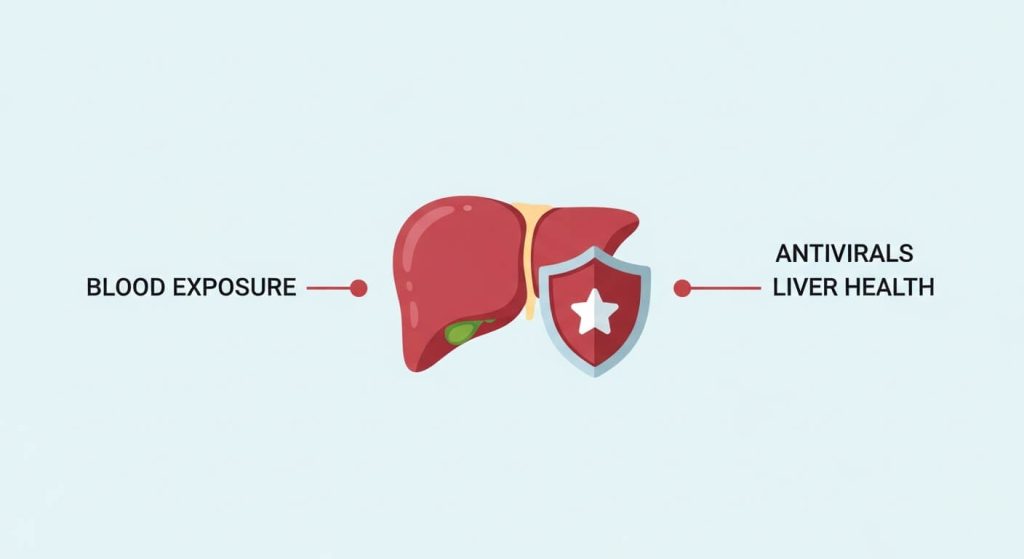
Hepatitis C spreads mainly through blood-to-blood contact. Everyday contact—hugging, sharing food, coughing, or kissing—does not transmit it. Risk increases when infected blood can enter another person’s bloodstream.
Most common routes
- Sharing needles, syringes, or other injection equipment
- Tattoos or piercings done with non-sterile tools
- Needlestick injuries in healthcare or emergency settings
Sometimes possible
- Sharing personal items that may carry tiny amounts of blood (razors, nail clippers, toothbrushes)
- Sexual transmission, especially when there is higher exposure risk (certain sexual practices, multiple partners, or coexisting STIs)
- Pregnancy or childbirth transmission in some cases
Who should prioritize screening
Testing is especially important if you have ever injected drugs, had a tattoo in a setting where sterilization was uncertain, have HIV, or have unexplained abnormal liver tests. Many guidelines also recommend one-time screening for most adults.
Symptoms
Hepatitis C symptoms: what you might notice and what you might not
Hepatitis C may cause no symptoms at all—especially early on. When symptoms do appear, they can be easy to mistake for other conditions.
Possible symptoms in early infection
- Fatigue
- Low appetite, nausea, or stomach upset
- Fever
- Muscle aches
- Abdominal discomfort (often right-sided)
- Jaundice (yellowing of skin or eyes) in some cases
Symptoms that can show up later (often tied to liver damage)
- Easy bruising or bleeding
- Persistent fatigue
- Itchy skin
- Dark urine or pale stools
- Swelling in legs or abdomen (fluid buildup)
- Unintentional weight loss
- Confusion, sleepiness, or trouble concentrating (can occur in advanced liver disease)
Complications to understand
Over many years, untreated Hepatitis C can increase the risk of:
- Advanced scarring (cirrhosis)
- Liver failure
- Liver cancer
Diagnosis
Hepatitis C testing: screening, confirmatory labs, and timing
You cannot diagnose Hepatitis C by symptoms alone. A simple blood test is the starting point.
The two-step approach (plain language)
- Antibody test: shows whether you’ve been exposed at some point.
- RNA (viral) test: shows whether the virus is currently present (active infection).
A positive antibody test does not always mean you still have Hepatitis C—confirming active infection requires an RNA test.
Window period basics
If the exposure was recent, the first test may be negative even if infection occurred. In that case, repeat testing may be recommended. For practical details on test selection and timing, see the CDC guidance on Hepatitis C diagnosis and testing.
After diagnosis: what clinicians often check
- Liver enzymes and liver function tests
- Level of scarring (blood scores and/or elastography)
- Coinfections and other conditions that affect treatment choices
Medications
Antiviral medicines for Hepatitis C: what “cure” usually means
Modern treatment relies on direct-acting antivirals (DAAs). These medicines block the virus from replicating, often leading to a sustained virologic response—meaning the virus remains undetectable after treatment ends. In everyday terms, this is commonly described as being “cured.”
Why the regimen is personalized
Your clinician selects therapy based on:
- Liver scarring (none, fibrosis, cirrhosis)
- Other medications (drug interactions matter)
- Kidney or liver function
- Prior treatment history, if any
Treatment success and safety tips
- Take doses exactly as prescribed to maximize success.
- Tell your care team about supplements and herbal products—some can interact with antivirals.
- Avoid alcohol to reduce stress on the liver.
If you’re comparing costs across medications in general, this guide can help explain differences: Generic vs. brand-name drugs: what changes and what doesn’t.
Treatments
Hepatitis C care plan: liver protection, follow-up, and reinfection prevention
Clearing the virus is only part of care. A complete plan focuses on liver recovery and reducing future risk.
Liver-protective steps
- Avoid or strictly limit alcohol
- Review all medications with your clinician to reduce liver strain
- Address metabolic risks (diabetes, obesity) that can worsen liver health
- Consider vaccination against hepatitis A and hepatitis B if recommended
Monitoring after treatment
Depending on liver status, follow-up may include:
- Repeat viral testing to confirm clearance
- Periodic liver labs
- Imaging-based monitoring for people with advanced scarring
Preventing reinfection
Prevention is about reducing blood exposure:
- Use sterile injection equipment and never share supplies
- Choose reputable tattoo/piercing shops that follow sterile procedures
- Don’t share razors, nail clippers, or toothbrushes
- Use safer sex practices when risk is higher
If you are planning care while traveling, prioritize licensed pharmacies and clinician guidance. For more context, see Pharmacies in Tijuana Mexico (2025): safety and practical tips.
FAQs
Hepatitis C FAQs: clear answers to common questions
Can Hepatitis C go away on its own?
Yes. Some people clear the virus during the acute phase. However, many do not, so testing and follow-up are important.
If my antibody test is positive, do I definitely have Hepatitis C?
Not necessarily. Antibodies show past exposure. An RNA test is needed to confirm active infection.
Is Hepatitis C sexually transmitted?
It can be, but it is less common than blood-to-blood transmission. Risk rises with certain practices, multiple partners, and coexisting STIs.
Is there a vaccine for Hepatitis C?
No vaccine is available yet. Prevention focuses on reducing blood exposure and using safer practices.
What should I do if I think I was exposed?
Get tested and talk with a clinician. Early evaluation helps you choose the right tests and timing, and it can protect your liver health.
References
References for Hepatitis C: trustworthy sources to learn more
Use clinician-reviewed resources and public health agencies for updated information on Hepatitis C, screening, and treatment. The CDC page linked above is a practical starting point.