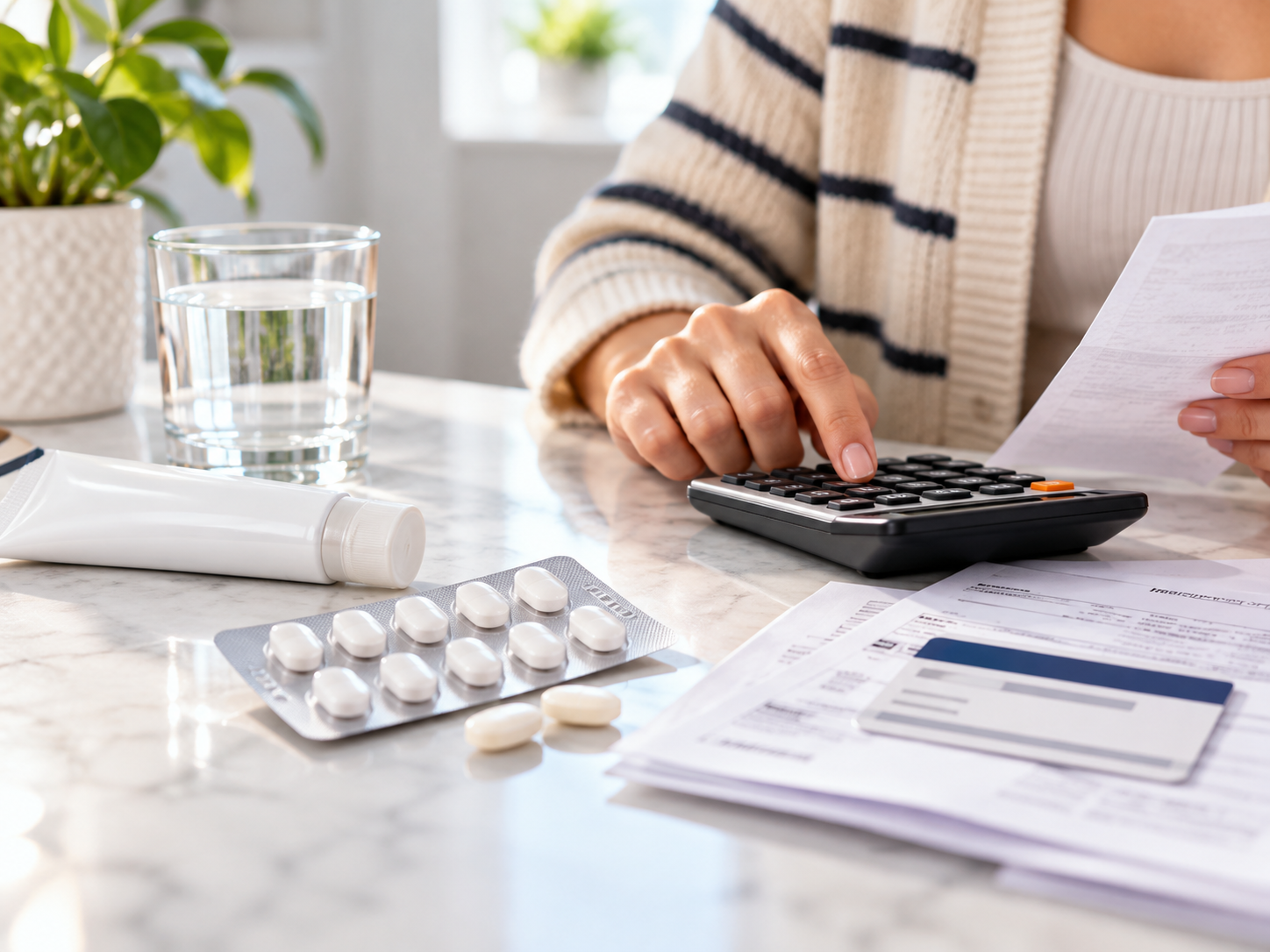
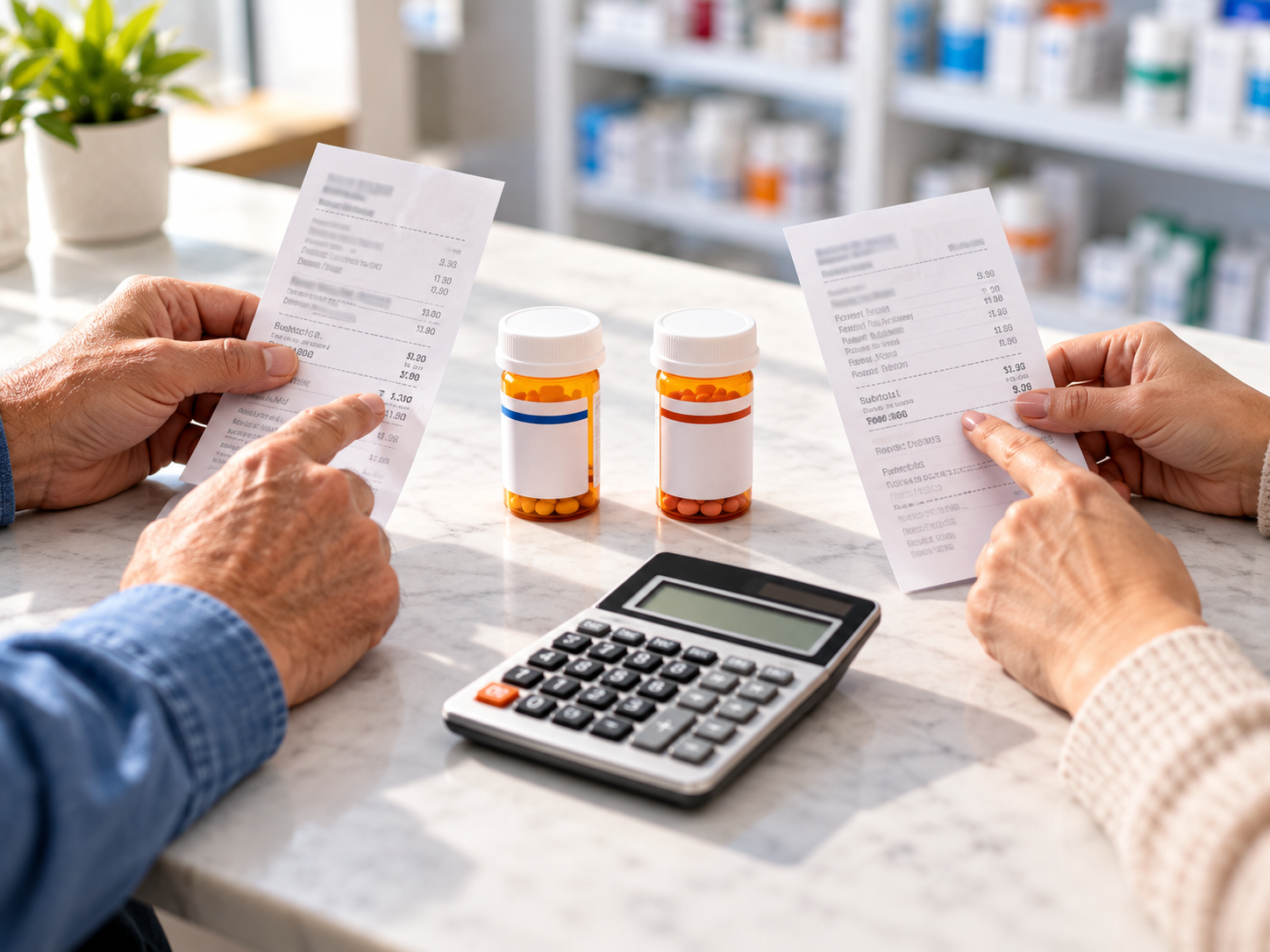


Eliquis cost varies more between two patients than almost any other widely prescribed medication in the United States. The gap between what one person pays and what their neighbor pays is unusually wide, because in 2026 there are now several entirely separate channels through which the same tablet can reach you.
Key takeaways
- Eliquis is among the first medicines subject to Medicare drug price negotiation, with negotiated pricing taking effect in 2026.
- A Medicare-negotiated price and a manufacturer’s direct-to-consumer price are not the same number, and neither is automatically your price.
- Generic apixaban has been approved in the US, but availability has been shaped by patent settlements, so confirm with your pharmacist rather than assuming.
- Cost pressure on an anticoagulant is a clinical safety issue, not only a budgeting issue.
- Never stop or ration an anticoagulant because of price without speaking to your prescriber first.
Eliquis prevents clots and strokes. Stopping it, skipping doses or stretching a supply to save money can carry serious consequences. If cost is the reason you are considering any of those things, call your prescriber before you change anything. There are almost always options, and rationing is not one of them.
What Eliquis is and why the price story is unusual
Eliquis is the brand name for apixaban, a direct oral anticoagulant. It is prescribed to reduce the risk of stroke in people with non-valvular atrial fibrillation and to treat and prevent deep vein thrombosis and pulmonary embolism. The NIH’s National Heart, Lung, and Blood Institute publishes patient background on atrial fibrillation, and full prescribing information is on DailyMed. Unlike older anticoagulants, it does not require routine dose-adjusting blood tests, which is part of why it became so widely used.
Its sheer volume is exactly why its pricing became a policy target. A drug taken daily, indefinitely, by millions of Medicare beneficiaries is a very large line item, and that made Eliquis one of the first medicines selected for the Medicare Drug Price Negotiation Program, with the negotiated price taking effect in 2026.
Four channels, four different Eliquis costs
For most medications a patient has one or two realistic routes. Eliquis in 2026 has more, and they do not produce the same number.
| Channel | Who it is for | What determines your cost |
|---|---|---|
| Medicare Part D with negotiated pricing | Medicare beneficiaries | Your plan’s cost-sharing applied to the negotiated price, plus the Part D out-of-pocket cap |
| Commercial insurance | Employer and marketplace plans | Formulary tier, deductible status, and whether a copay card applies |
| Manufacturer direct-to-consumer | Mostly cash-paying patients | A set cash price published by the manufacturer, outside insurance |
| Generic apixaban | Where dispensable | Pharmacy acquisition and your plan’s generic tier |
The important and widely misunderstood point: a direct-to-consumer cash price is not automatically lower than what you would pay through insurance, and it is not the same as the Medicare negotiated price. The Kaiser Family Foundation published analysis showing that Eliquis’s direct-to-consumer price is still higher than the Medicare negotiated price. Check both before assuming either.
The generic question, answered honestly
“Is there a generic for Eliquis” is searched roughly 2,900 times a month in the US, and the honest answer has two halves. Generic apixaban has received FDA approval. Whether you can actually walk into a pharmacy and fill it has depended on patent litigation and settlement timing, which is a commercial question rather than a regulatory one.
That means the only useful answer is a current one. Ask your pharmacist: “Can you dispense generic apixaban today, and what would my cost be on my plan?” Anything else, including an article written six months ago, is out of date by the time you read it.
If you have Medicare
Two things changed the math for Part D beneficiaries. The first is the negotiated price itself. The second is the annual out-of-pocket cap, which puts a ceiling on what you spend on covered Part D drugs in a year. For someone taking a daily anticoagulant indefinitely, that ceiling is often the single most important number in their coverage. We go through it in detail in Medicare Part D’s $2,100 cap in 2026.
Note that manufacturer copay cards remain unavailable to Medicare beneficiaries under federal anti-kickback rules, regardless of negotiated pricing.
If you have commercial insurance
Your cost is driven by formulary tier and deductible status far more than by any headline price. Three things to check:
- Tier placement. Eliquis is typically a preferred or non-preferred brand rather than a specialty tier, which usually means a flat copay rather than a percentage.
- Deductible status. Early in the plan year you may be paying the full negotiated rate until the deductible is met.
- Assistance accounting. If your plan runs a copay accumulator or maximizer, the manufacturer’s contribution may not count toward your deductible at all. That mechanism is explained in copay accumulator vs copay maximizer.
If you are uninsured or underinsured
This is where the decision tree genuinely opens up, and where most of the bad advice lives. Work through the options in this order:
- Ask the pharmacy for its cash price, then ask a second pharmacy. Cash prices vary more than people expect.
- Check whether generic apixaban is dispensable at either.
- Check the manufacturer’s direct-to-consumer channel and the patient assistance program.
- Only then consider cross-border options, and read the next section first.
Anticoagulants and cross-border supply: the continuity problem
Oral tablets travel far more easily than refrigerated biologics, so the practical obstacles that make cross-border access difficult for an injectable largely disappear here. But anticoagulants introduce a different and more serious consideration: continuity.
A gap in an anticoagulant supply is not an inconvenience. It is a clinical risk. Any arrangement that depends on a trip happening on schedule needs enough buffer that a delayed crossing, a stock-out or a change in plans never produces a missed day. If an access route cannot guarantee that, it is the wrong route for this particular medication, whatever it costs.
There is also a legal dimension to bringing medication back into the United States, which is specific and worth understanding before travel rather than at the border. We cover it in the FDA’s Personal Importation Policy, explained.
Provide Rx Services does not prescribe, sell or dispense medication, and will not help anyone build a supply plan that puts a gap in an anticoagulant. What a case manager can do is confirm, in advance, whether a given product is reliably obtainable, which is exactly the information needed to decide whether this route is appropriate at all.
Final thoughts
Eliquis sits at the intersection of two things that rarely overlap: a very public pricing debate and a very private clinical risk. The policy changes are real and they matter. But the decision in front of any individual patient is narrower: which of the available channels applies to them, and which one they can rely on every single day without interruption. Price comes second to that.
Frequently asked questions
Is there a generic for Eliquis?
Generic apixaban has been approved by the FDA. Actual pharmacy availability has been shaped by patent settlements and has changed over time, so the only reliable answer is a current one from your pharmacist. Ask whether they can dispense it today and what your cost would be on your plan.
Does the Medicare negotiated price mean I pay that amount?
No. The negotiated price is what the program pays; your out-of-pocket cost is your plan’s cost-sharing applied to it, subject to the annual Part D out-of-pocket cap. Your plan’s own documents are the authoritative source for your number.
Is the direct-to-consumer Eliquis cost cheaper than insurance?
Not necessarily. A direct cash price is a single published figure that bypasses insurance; whether it beats your insured cost depends entirely on your plan, your tier and your deductible status. Compare both before choosing, and be aware that cash purchases usually do not count toward your deductible.
Can I split tablets or stretch my supply to save money?
No. Altering the dose or frequency of an anticoagulant without your prescriber’s instruction can increase the risk of stroke or clotting. If cost is the problem, that is a conversation to have with your prescriber and pharmacist, who have options you may not know about.
Can I get apixaban at a pharmacy in Mexico?
Availability varies by pharmacy, presentation and day, so no responsible answer can be given in advance without checking. For an anticoagulant the more important question is continuity of supply rather than price, and there are specific US rules on bringing medication back across the border that should be understood before traveling.
Check availability before you plan anything
A bilingual case manager can verify whether your specific medication is obtainable and what it would cost, usually within 24 hours, with no obligation.
Get my free quoteTalk to a case managerProvide Rx Services is a U.S.-based concierge service specializing in Prescription Tourism. We do not prescribe, sell, or dispense medications. This article is general information, not medical advice. Never change how you take an anticoagulant without speaking to your prescriber.