


There is no single Dupixent cost. Two people filling the same prescription at the same pharmacy on the same day can pay amounts that differ by thousands of dollars, not because one of them negotiated better, but because four separate systems decide the number before they reach the counter.
Key takeaways
- Dupixent is a biologic, so the familiar “wait for the generic” path does not apply the way it does to pills.
- Your cost is set by your plan’s benefit design and your position in the plan year, not by the drug’s list price.
- Manufacturer copay cards cannot legally be used by patients on Medicare, Medicaid or other federal programs.
- January is structurally the most expensive month of the year for specialty medications.
- Before comparing any price, confirm which benefit your plan runs the drug through: pharmacy or medical.
What Dupixent is, and why that shapes the price
Dupixent is the brand name for dupilumab, a biologic medicine given by subcutaneous injection. It is prescribed across several conditions driven by type 2 inflammation, including moderate-to-severe atopic dermatitis, certain forms of asthma, chronic rhinosinusitis with nasal polyps and eosinophilic esophagitis. The NIH’s National Institute of Arthritis and Musculoskeletal and Skin Diseases publishes plain-language background on atopic dermatitis, and full prescribing information is available on DailyMed. Your prescriber determines whether it is appropriate for you; this article is about economics, not clinical suitability.
That biologic status matters enormously for cost. Biologics are grown in living cell systems rather than synthesized from chemicals, which makes them expensive to manufacture, expensive to transport and impossible to copy exactly. There is no such thing as a “generic biologic.” The closest equivalent is a biosimilar, a separately approved product shown to be highly similar to the reference biologic with no clinically meaningful differences. The FDA explains the category in 9 things to know about biosimilars.
Biosimilar availability changes on a rolling basis and varies by country. Do not assume a biosimilar exists for any given molecule, and do not assume that one approved in Europe is marketed in the United States. Ask your pharmacist directly what is dispensable on your plan this month.
Dupixent cost: the four numbers that decide what you pay
When someone asks how much Dupixent costs, they are usually conflating four different figures that belong to four different parties. Separating them is the single most useful thing a patient can do before a pricing conversation.
| Number | Who sets it | What it represents | Do you ever see it? |
|---|---|---|---|
| List price | The manufacturer | The published wholesale price before any discount | Only if you are uninsured and paying cash |
| Net price | Manufacturer and pharmacy benefit manager | What the plan actually pays after confidential rebates | No, this is almost never disclosed |
| Plan cost-share | Your insurer | Your copay, coinsurance percentage, or deductible exposure | Yes, this is your real number |
| Cash or international price | The dispensing pharmacy | What the pharmacy charges with no insurance involved | Yes, if you pay directly |
Headlines quote the first number. Patients experience the third. Those two figures are related only loosely, which is why a news story about a drug’s list price tells you almost nothing about your own bill.
Pharmacy benefit or medical benefit? Check this first
Self-injected biologics usually run through your pharmacy benefit, which means a copay or coinsurance on a specialty tier and a specialty pharmacy doing the dispensing. Infused drugs usually run through your medical benefit, which can involve a different deductible, a different coinsurance percentage and a facility fee.
Dupixent is self-injected, so the pharmacy benefit is the common path, but plan design varies, and some plans route it differently. If you are comparing prices and the numbers seem incoherent, this is usually why. Call the number on your insurance card and ask the question in exactly these words: “Is this drug covered under my pharmacy benefit or my medical benefit, and what tier is it on?”
Why January is the most expensive month
Most US plans reset the deductible and the out-of-pocket maximum on 1 January. For a specialty medication, that produces a predictable annual shape: a very large bill early in the year while the deductible is being satisfied, a moderate cost-share through the middle, and little or nothing once the out-of-pocket maximum is reached.
This matters for planning. If you are told the drug costs a certain amount, ask when in the plan year that figure applies. A quote taken in November describes a very different situation than the same prescription filled in January.
Commercial insurance and Medicare are two different games
If you have commercial insurance
Manufacturer copay assistance is generally available, and for many commercially insured patients it is the single largest factor in what they pay. The catch is that some plans have changed how that assistance is counted, which is the subject of copay accumulator and maximizer programs, and worth understanding before you assume the card is working.
If you have Medicare, Medicaid or another federal plan
You cannot use a manufacturer copay card. Federal anti-kickback rules prohibit it. This surprises people every year, often at the pharmacy counter. The alternative routes are independent charitable foundations and the manufacturer’s own patient assistance program, which have their own eligibility rules and application processes. The structure of Part D coverage and its annual out-of-pocket cap becomes the governing factor instead.
If you are on Medicare, the 2026 Part D structure changes the arithmetic significantly. We cover it separately in Medicare Part D’s $2,100 cap in 2026.
The cold-chain question almost nobody answers properly
One of the most common searches attached to this medication has nothing to do with price: people want to know how long it can be out of the refrigerator. That is a genuinely important question, and it becomes critical the moment travel is involved.
Dupixent is a refrigerated biologic. The manufacturer specifies a limited room-temperature window in the Instructions for Use supplied with the product, along with a maximum temperature and the instruction to discard the product if that window is exceeded. Those figures are printed on your carton and in your leaflet, and they are the only authoritative source. Do not rely on a number quoted in a forum, including this one. Read your own packaging and confirm it with the dispensing pharmacist.
Practical rules that hold regardless of the specific numbers:
- Never freeze a biologic. A frozen pen is a discarded pen, with no exceptions.
- Transport in an insulated container with a temperature indicator, not loose in a bag.
- Keep the product in its original carton, which protects against light as well as heat.
- Never put a refrigerated biologic in checked luggage, where the hold temperature is uncontrolled.
- If the cold chain is broken, document the time and temperature and call the pharmacy before injecting.
Questions to ask before you accept any Dupixent cost quote
- Is this billed under my pharmacy benefit or my medical benefit?
- What tier is it on, and is my cost a flat copay or a percentage coinsurance?
- Have I met my deductible, and what is my remaining out-of-pocket maximum?
- Does my plan apply manufacturer assistance toward my deductible?
- Is there a required specialty pharmacy, or can I choose?
- Is prior authorization required, and is it already on file?
Where cross-border access fits, and where it does not
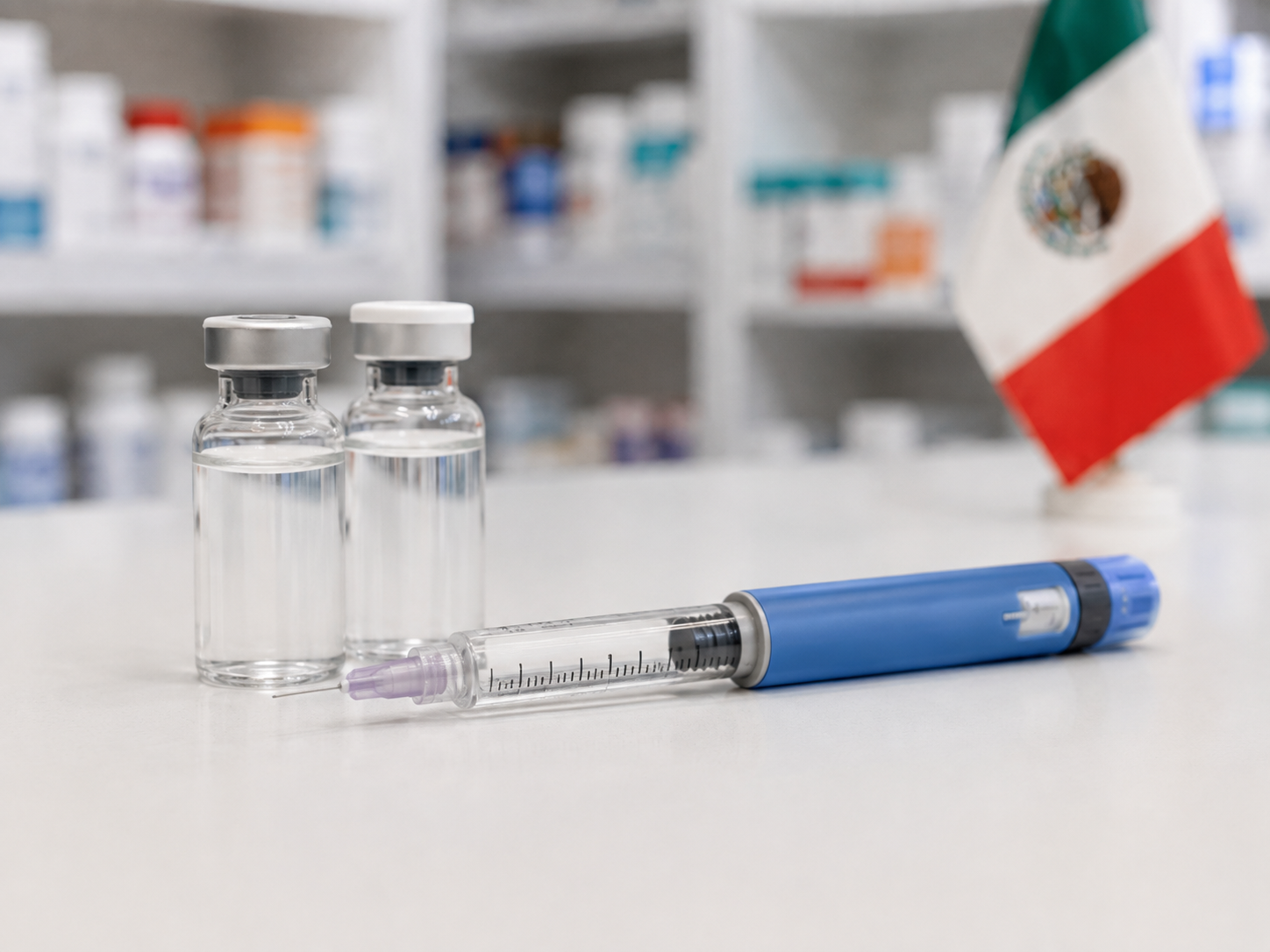
For patients who have exhausted insurance routes, licensed pharmacies in Mexico are sometimes part of the conversation. Three things are worth stating plainly before anyone books a trip.
First, availability is specific: a medication being sold in Mexico generally does not mean every presentation, strength or brand is in stock at a given pharmacy on a given day. Second, a refrigerated biologic raises the logistics bar considerably: the cold chain has to hold through the pharmacy, the crossing and the drive home. Third, the legal framework for bringing medication back into the United States is specific and worth reading before you travel, not after; we cover it in the FDA’s Personal Importation Policy, explained.
Provide Rx Services does not prescribe, sell or dispense medication. What a case manager can do is verify, before you spend anything on travel, whether a specific product is actually obtainable, which is the question that determines whether the trip makes sense at all.
Final thoughts
The useful question is never what Dupixent costs in general. It is what will I pay, under this plan, in this month, through this benefit. Once a patient can answer those four, every other conversation, from assistance programs to foundation grants to cross-border options, becomes tractable. Until then, quoted prices are noise.
Frequently asked questions
Is there a generic version of Dupixent?
No. Dupixent is a biologic, and biologics do not have generics in the way small-molecule pills do. The equivalent category is a biosimilar, which is separately approved. Biosimilar availability varies by molecule and by country and changes over time, so confirm current options with your pharmacist rather than assuming.
Why is my first fill of the year so much higher?
Because most plans reset the deductible on 1 January. Until that deductible is satisfied, you are exposed to a much larger share of the cost. The same prescription later in the plan year will typically cost you far less.
Can I use a manufacturer copay card if I have Medicare?
No. Federal anti-kickback rules prohibit the use of manufacturer copay cards by patients enrolled in Medicare, Medicaid or other federal healthcare programs. Independent charitable foundations and the manufacturer’s patient assistance program are the usual alternatives, each with its own eligibility criteria.
How long can Dupixent stay out of the fridge?
The manufacturer specifies a limited room-temperature window and a maximum temperature in the Instructions for Use supplied with your product. Read the figures on your own carton and leaflet and confirm them with your pharmacist. Those are the only authoritative sources. Never freeze the product, and never inject a pen whose cold chain you cannot account for.
Is the Dupixent cost lower in Mexico?
There is no fixed answer, and anyone quoting a flat figure is guessing. Pharmacy pricing in Mexico varies by pharmacy, presentation and availability on the day. For a refrigerated biologic there is also the cold-chain question, which affects whether a trip is practical at all. The only reliable approach is to have availability and cost verified for your specific product before committing to travel.
Find out what your medication would actually cost
Send us your prescription and a bilingual case manager confirms availability and your cost, usually within 24 hours, with no obligation.
Get my free quoteTalk to a case managerProvide Rx Services is a U.S.-based concierge service specializing in Prescription Tourism. We help clients safely access affordable medications from licensed providers in Tijuana. We do not prescribe, sell, or dispense medications. This article is general information, not medical advice.